Fixture: Everything a Bill Carries
Fixture copy exercising every reading affordance at once — headings, lists, quote, code, table, footnotes, an aside, and a plate — for layout judging only.
This is fixture copy for layout development, not real writing. It exists to prove the reading template can carry everything Bill actually writes on one sheet without turning into a theme demo.
A bill is mostly type, with a few things pasted alongside it1
Most days it is paragraphs like this one: a plain claim, a qualifier, a short second sentence. But some days the argument needs a list, a table, or a photograph of the thing being described, and the sheet has to hold all of it without losing the reader.
- Wayfinding stays printed on the paper, never a navbar
- Texture whispers; typesetting is the star
- Annotations are used sparingly, and only when they earn the space
The same rules apply in a numbered form when the order actually matters2:
- Draft the claim in plain paragraphs first
- Add structure only where the plain version gets confusing
- Cut anything that exists only to look finished
Ordering is a small tax worth paying
Numbered lists cost the reader a beat of extra attention2. That tax is worth paying exactly when sequence carries meaning — steps, rankings, a chronology — and not otherwise.
A barrier that says nothing is usually a badly designed one.
That line is doing double duty here: it is fixture copy, and it is also a fair description of a template that renders a blockquote but never actually tests one.
Inline code needs to survive too, like wallPage(posts) sitting in a sentence without breaking the baseline. A fenced block should hold a genuinely long line so horizontal scroll can be checked on a phone as well as a desktop monitor:
const totalPasteSoakByBoardAndSeamOffset = computeSeamOffsets(boards).map((seam, i) => tintForSeam(seam, boards[i], i, WEATHER_TABLE[i % WEATHER_TABLE.length]))
console.log(totalPasteSoakByBoardAndSeamOffset.join(', '))
A short table can carry a comparison faster than three paragraphs would3:
| Affordance | Where it lives | Fails silently? |
|---|---|---|
| Footnotes | small print at the foot of the sheet | No — undefined refs warn at build |
| Captions | under a standalone image | Yes, if the title attribute is empty |
| Feed link | the colophon, every page | No — always printed |
The plate below is a synthetic fixture, not a real photograph: a light field with a few dark shapes standing in for a diagram, generated for layout judging only.
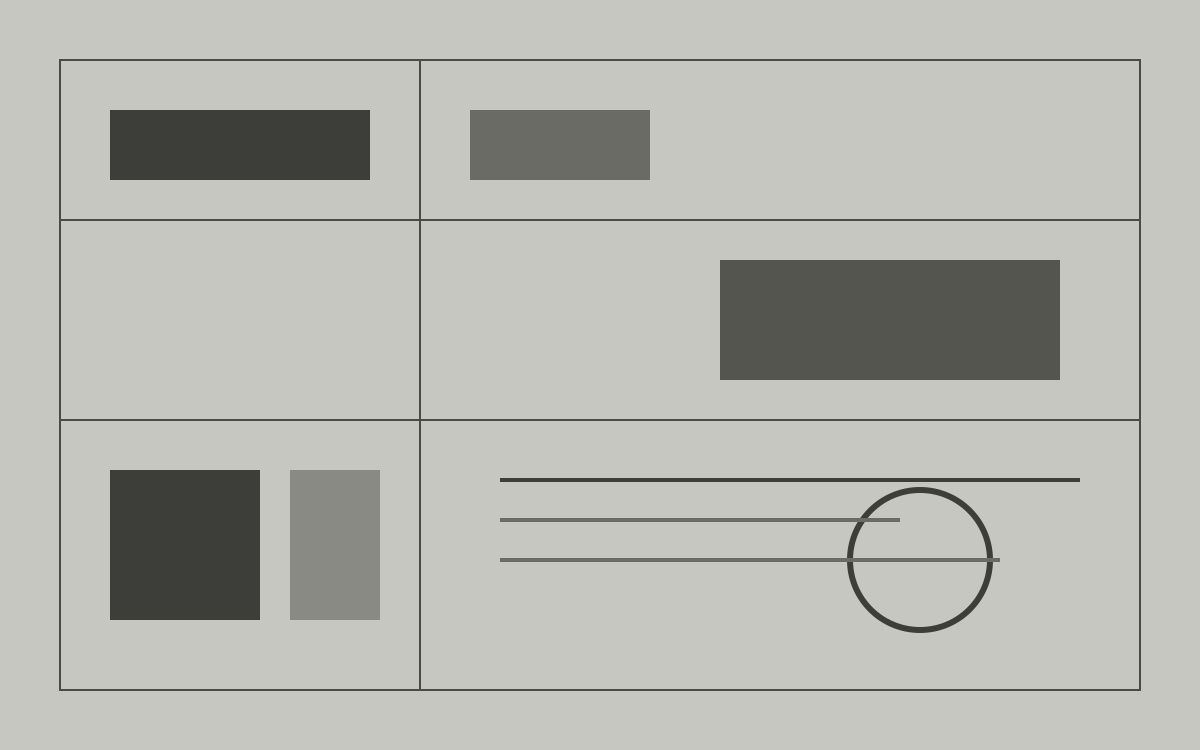
None of this needed the aside to explain the picture; the caption already did that work, in the small print, where a bill's captions actually live.
Notes
Everything in this post is fixture copy per the repo charter — clearly marked, never mistaken for a real essay. ↩
This is the "multi-reference" case: this same note is called twice above, so both superscripts should resolve to one shared entry here, with a return arrow for each call. ↩ ↩
A longer definition, to check that wrapped footnote text still sits comfortably at small-print size — long enough to run past a single line on a narrow phone screen, which is exactly the case worth checking, since short definitions never reveal a line-height problem. ↩