Slopmark
A lot of people have been noticing markers of AI-generated content, whether that’s the load-bearing vocabulary of Claude or AI-designed websites all feeling and looking the same.
Krebs noticed the broader themes in April, and I started paying attention to it in July:
A hero word mark on the front page with some effect on one of the fucking words, whether that’s italicized or whatever, right? It’s a slopmark.

But I don’t think slopmarks are bad per se, they tell me where the content most likely came from (AI). I don’t need to spend time on that page at all, just like how a spec riddled with load-bearing seams or mannered prose doesn’t deserve my attention.
Ant’s Opus 5.5 prompting guide suggests telling Claude not to use “italic accent words in headlines”, which basically means “no more slopmarks”, and their announcement post covers the load-bearing communication improvements, so that’s two major slop-isms mentioned in 5.5.
Here’s some more slopmarks I found since, surprised by some of the big companies who likely have their own design teams.
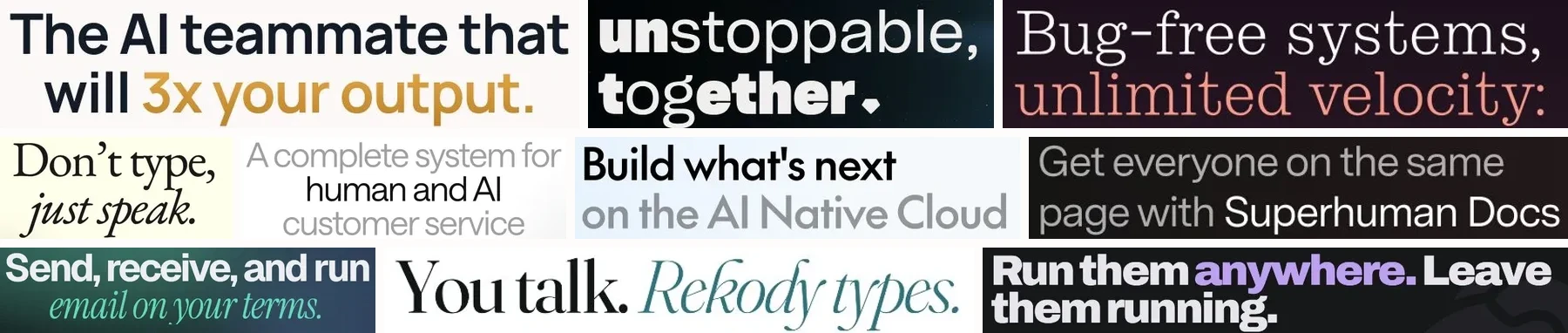
Today I came across Gwern’s post on mode collapse: post-training causes models to “lose their ‘creativity’ or ‘diversity’ of responses”. TypeSafe covers a milder version of this called mode dropping where the “model learns to favor a particular style, such as instruction following, while reducing the probability of other possible outputs.”
This post aims at the seemingly superficial: I can deal with bad web design and overly verbose prose. But if you zoom out, much of the world (I inhabit) was powered by Claude 5, and we all quickly loathed the slop-isms that came with it. Then, they released Claude 5.5 and we all rejoiced because the slop-isms were no more (seriously, the enthusiasm at my company was palpable).
On the surface, great! But I can’t help but think about the deeper ‘monoculture of judgement’ (h/t Claude for the term) that results as a single model release (and distillations thereof) gets rapidly adopted into every facet of our society. Imagine the dark side of a slopmark, like a bias against a certain socio-economic class in financial contexts, where a model upgrade is rapidly adopted into agents that decide what you can and cannot do.
I’m not an interpretability or alignment expert, but there’s something seemingly pernicious about what lies beyond reduced creativity and diversity of output, and how quickly changes in that judgement (a model upgrade) propagate.