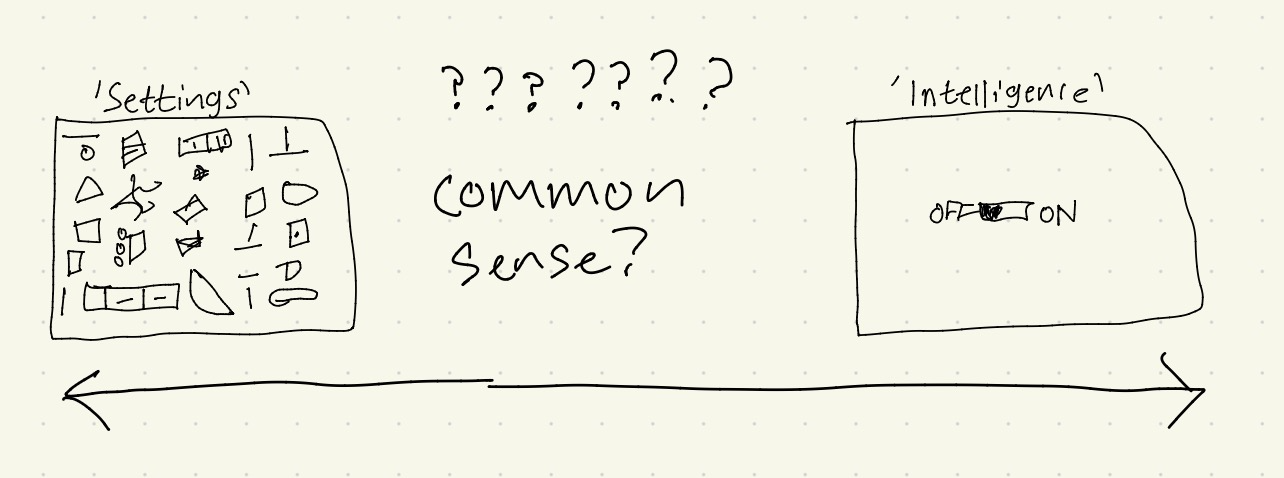
Somewhere in the middle
I am one of those people who never turn off DnD, which means I miss things like flight changes or Venmo requests, and that makes me unreliable. I take that trade, as otherwise I can’t focus. And I feel stuck here because Apple’s answer is a torturous concoction of too-many settings, some manual and all or nothing, others ‘intelligent’ and utterly opaque, neither of which work for me.
You can see both ends on a single Focus Mode screen:
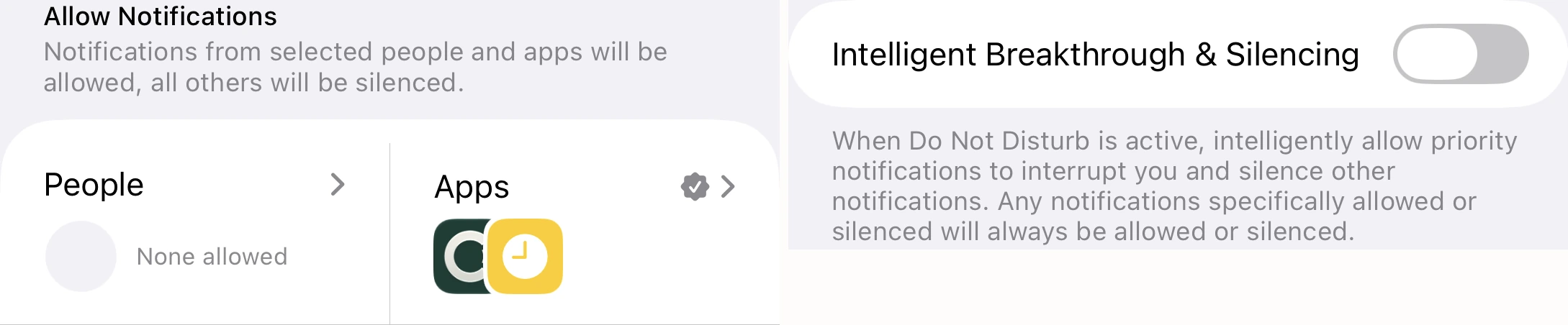
Apps are out because 80% of my notifications come only three apps (Gmail, iMessage, WhatsApp), and those three touch nearly every person and company in my life. People are also out, as not every interaction is priority. Like, my dad, my closest family, texting to ask about the weather is not a priority, whereas my neighbour, a borderline stranger, texting about smoke coming from my apartment most certainly is.
That leaves you with Apple’s Intelligent Breakthrough & Silencing feature, which lets them decide what’s a priority, and thus what interrupts you.
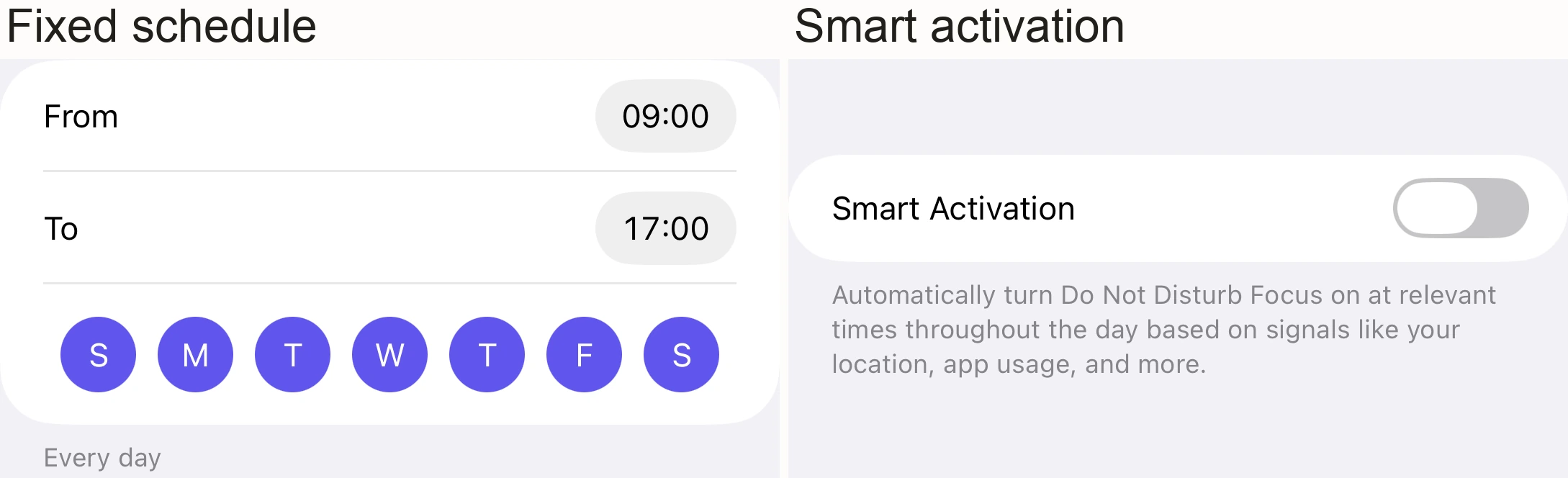
Schedules give you a manual day and time based activation, which is nigh useless. Imagine a holiday or a half-day at work, a funeral you took the day off for, or just going for a mid-day walk in the park for some personal time, all exist Mon-Fri 9-5 but none are ‘Work’ mode.
That leaves you with Smart Activation, which automatically enables a mode at ‘relevant times throughout the day based on your location, app usage, and more’. Good luck figuring out how Apple decides that, especially among multiple smartly activated (and thus competing) modes.
And Focus is just one corner of a much more broader ecosystem of Apple’s native controls and third-party apps:

I included Muse and Gmail in there as they layer on their own intelligent ways of controlling notifications. Since 2018 Gmail has had a model that determines what emails are ‘high priority’, which you filter notifications down to. That one’s like Apple, no control or visibility.
Muse is interesting because it’s almost entirely AI driven (apart from the simple in-app toggle). You instruct Muse in prose, like “don’t annoy me about Venmo payments confirmations” or “let me know if the hotel responds ASAP”. And at any point you can clarify or correct it in the chat.
This is not a panacea, as Muse (and other agentic apps) don’t have provide much transparency into how their memory and preference systems work, so you can’t really tell what or why something was let through or silenced. And they combine with Apple’s systems in confusing ways.
The other day, my buddies and I got a Supabase security warning email for an app we built. Muse deemed that urgent and important, as did Dot, and my friends brought it up in our group chat. I ended up receiving three redundant notifications, as each app/agent only sees itself, and there’s no global view on notifications (Apple could I guess, but they’re still treating notifications as the unit of attention, and Siri’s summarises are laughable).
So I got interrupted three times, for something that someone else already confirmed they’d handle. And all along the way there were layers of settings, some manual and others intelligent, that combined in ways I cannot comprehend. And I had zero visibility or say into how any of it behaved.
For now it seems I’m stuck on DnD, wondering what the middle of these two extremes might look like.